Ads 468x60px

Showing posts with label Tips/Nota. Show all posts

Sunday, 18 November 2012

How To Make Full Use Of Your School Holidays


So your exams are over and the school holidays are here. What are you going to do?

It's a great time to sit back and relax after all the stress caused by your exams. While some of your friends have great plans for this  school holidays, you may have made no plans at all. If so, we would like to recommend the following.

1. Relax And Recuperate!

For those of you who have worked very hard for your exams and are stressed out, it is high time for you to take time off your school studies.

Make use of your school holidays to calm your nerves and reduce your stress level. You will feel better and more full of drive and energy when school reopens.

So how to calm your nerves? Read our second suggestion below.

 2. Take Up An Adventure!


For those of you who love adventures, this is a good time to take up an adventure. For example, you may join a school camp, an around-the-island bicycle ride or a treasure hunt. You may even visit an outer island or a foreign country.

Such adventures not only take your mind off your school work and reduce your mental stress, they also pump more excitement into your life. You will get to learn new skills such as setting up a camping tent, meet new friends or learn more about your classmates, and acquire new knowledge such as the lifestyle of an islander or a foreign citizen.

At the end of the adventure, you may even wish for more adventures!

3. Pursue Your Interests!


 In the midst of studying, you may not have much time for your other interests, such as reading, singing, boat rowing, flower arrangement, or taking up a computer course.

Your school holidays will be a good time for you to pursue your interests. It will make you feel that your life is meaningful and rewarding, as well as pump more zest into your life.

For the time being, school work is out of your mind and your stress level will naturally go down.

4. Volunteer Your Time!


With a few weeks of school holidays, you will have plenty of time on your hands. Thus, it is a good time for you to look around you and realise that there are many people who are less fortunate than you. They include the elderly who are staying in homes for the aged, the handicapped, mentally retarded children, and orphans staying in orphanages.

 You may wish to become a volunteer and offer your time to take part in some social work. This could include visiting homes for the aged and putting up some performances for them. It could also include collecting unwanted newspapers from residential areas for sale to raise funds for the needy.

By taking part in such volunteer work, you could contribute your time and effort towards helping the needy. It could turn out to be a most rewarding experience for you.

5. Catch Up With Your Family And Friends!


Every one of us is involved in our own personal affairs everyday. Amidst all this, we sometimes neglect the important people around us, including our family members and friends.

 For example, while studying for your exams, you might not have spared enough time for your parents, brothers and sisters. You might be too preoccupied with your own studies that you did not realise that your family members might have needed you most at that time.

Your action may have even caused them hurt. Recall how your parents have taken great care of you all this while, and how your brothers and sisters have helped you in many ways too.

What you can do now is to try and catch up lost time with them. Show your care, concern and appreciation towards them. It may mean as little as helping with the housework while your parents are working. It may mean as easy as helping your brothers and sisters with their school projects. This will not only make your family more united, it will also make them realise that you also cherish them.

Remember, though, that you should not stop doing so once school reopens!

6. Clear Up Your Room!


Did you create a big mess of your rooms while preparing for your school exams? Did you throw your books all over the place, dump your belongings in all corners, and forget to clear your waste paper baskets? Then this is a good time to start clearing your room if you are guilty of the above.
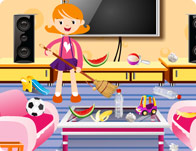
 A tidy and clean room is conducive to living and studying. It also shows how much you respect yourself and your family members. Your family members will greatly appreciate it if your room is neat and clean when they bring their friends home. So will your friends when they suddenly pay you a surprise visit!

7. Take Up A Vacation Job!


You can take up a vacation job during your school holidays. This will allow you to gain valuable working experience, including gaining new job skills, learning how to interact with people, and understanding how difficult it is for your parents to work and support you.

You may even wish to try a job similar to what you wish to do when you graduate. This will allow you to get a feel of how your future job may be like, and you can decide whether it is suitable for you or not.

Of course, the extra cash you will earn at the vacation job will also bring you satisfaction, because you have worked for it!

8. Catch Up On Your Studies!


Last but not least, if you have not worked hard enough in your previous semester, or are still lagging behind your classmates despite your hard work, you should make use of your school holidays to catch up with your school work.

 Nobody said studying is easy, but if you are willing to spend more time on your studies, you will achieve good grades in time to come. Remember the golden rule,"Practice makes perfect!"

Saturday, 10 November 2012

Figurative Language


Figurative Language is the use of words that go beyond their ordinary meaning.  It requires you to use your imagination to figure out the author's meaning.  For example, if someone tells you that it is raining cats and dogs, you know that there are not actually cats and dogs falling from the sky.  You know it really means that it is raining very hard.

    The PSSA evaluates students' ability to figure out such language.  There are several terms you should be familiar with to have a better understanding of each.
They are:

                     Alliteration                                Metaphor

                      
                      Hyperbole                                Personification


                      Idiom                                       Simile

Alliteration is the repetition (repeating) of a consonant sound at the beginning of two or more words that are next to each other or near each other to create a feeling or mood.  For example, in the sentence, "Fly away, my fine feathered friend!" the "f" sound is repeated over and over again. 
To earn two stars on your folder, correctly complete the following sentences on a separate sheet of paper so that they become examples of alliteration:

1.  The two turtles...
2.  The ragged doll...
3.  A horrible house...
4.  A tiny kitten...
5.  One little mouse...
6.  The dirty dog...
7.  The broken computer...
8.  The little girl...
9.  Eight ants...
10. Delicious cookies...

A hyperbole is an exaggeration of the truth, usually meant to be humorous or funny.  The sentence, "I can eat a million ice cream cones", is an exaggeration of the true fact that the speaker likes ice cream cones.

Writers and poets use hyperbole to get a point across or to be funny.
Read the two stanzas below from the poem, "No Difference", by Shel Silverstein and see if you could identify the hyperboles.
                      
                                      Small as a peanut,
                                      Big as a giant,
                                      We're all the same size
                                      When we turn out the light.

                                      Rich as a sultan,
                                      Poor as a mite,
                                      We're all worth the same 
                                      When we turn out the light.

   Silverstein is using hyperbole to exaggerate people's size and wealth to be humorous and to make a point.

    Read the following excerpt from the tall tale, The Growin' of Paul Bunyan by William J. Booke.  Write all of the examples of hyperbole that you can find in these paragraphs on a separate sheet of paper.  You will earn one sticker for each hyperbole you correctly identify.

    The hardest thing for ole Paul about gettin' started in the mornin' was puttin' on his boots.  It wasn't so much the lacin' up that got him down (although when your bootlaces are exactly 8,621 feet an' four an' three quarters inches long, an' each one has to be special ordered from the Suwanee Steamship Cable Company in New York City, an' if because you're strong as ole Paul you tend to snap about two laces a week as a rule, then just tyin' your boots can be a bit of an irritation, too).

    No, the hardest part o' puttin' on his boots was makin' sure he was the only one in 'em.  Because, you see, they was so big an' warm that all the critters liked to homestead in 'em.  So he'd have to shake 'em for nine or ten minutes just to get out the ordinary rattlesnakes an' polecats.  Then he'd reach in an' feel around real careful for mountain lions an' wolf packs an' the occasional caribou migration.  Fin'ly he'd wave his hand around real good to see if any hawks or eagles was huntin' game down around the instep.  Then he could start the chore o' lacin'. 


An idiom is a phrase that is made up of words which can't be understood by literal, or ordinary, meaning.  For example, the idiom, or expression, "hit the road", has nothing to do with going out your door and smacking your street.  It really means "go away".  

Below is a list of some common idioms and their actual meanings.

Idiom                                                       Actual Meaning
Cross that bridge when you come           Don't worry about problems
to it.                                                          until they actually happen.

hit the hay                                                go to bed

raining cats and dogs                              raining hard

on cloud nine                                           very happy; joyous

once in a blue moon                                almost never; not very often

    One a separate sheet of paper, write the idiom found in each sentence and next to it, the actual meaning.  You will need to use context clues to figure out the real meanings if you have never heard of the idiom before.  You will earn three stickers if you correctly identify the idioms and their actual meanings. 

1.  If you don't hand in your report, you will miss the boat for an "A".

2.  Tomorrow is Jack's surprise party, so don't let the cat out of
      the bag when you see him.

  3.  When Erin didn't do her homework and failed the quiz, her mom
      hit the roof.

  4.  Joe is down in the dumps since his friend moved away.

  5.  Mary wasn't paying attention and seemed out in left field when
      the teacher called on her.

  6.  George said I would lose, but since I didn't, he will have to eat his 
      words.

  7.  You shouldn't spend an arm and a leg on a foolish video game!

  8.  He went out on a limb and asked the principal if he could miss
      class to go to the party.

  9.  All I said was I didn't feel like doing my work and the teacher
      jumped down my throat.

10.  When Sara didn't turn in her project, her "A" went down the
      drain.


A metaphor is a comparison of two different things to show a likeness between them.  Metaphors do not use the words like or as when making comparisons, as do similes.  Sometimes, they say that one thing is another, such as " her teeth are pearls".  Metaphors also suggest a comparison.  For example, in the line, "The fog comes in on little cat feet", from "The Fog" by Carl Sandburg, the fog is being described as if it were a cat. 

    Read the descriptive paraghraph below and, on a separate sheet of paper, write all the metaphors you find and describe the comparison.  For each correct metaphor and comparison you identify, you will receive a sticker on your folder.

    Autumn is a season of dust.  Into the dust crumble memories of powerful ocean tides hitting a sea of sand, early morning walks on a white crescent of beach, and sun scorched hills where the beauty of the summer slowly unfolds.  But autumn, too, will bring her own memories.  The foilage is a painting come to life and the music of the falling leaves will serenade us into winter.


Personification is the technique of giving a non-human thing human qualities such as hearing, feeling, talking, or making decisions.  Writers use personification to emphasize something or make it stand out.  Personification makes the material more interesting and creates a new way to look at every day things.

     Read the poem "Summer Grass" by Carl Sandburg and think about how personification is used to make the poem more descriptive.

                    "Summer Grass" by Carl Sandburg

                      Summer grass aches and whispers
                     It wants something: it calls and sings; it pours 
                                 out wishes to the overhead stars.
                     The rain hears; the rain answers; the rain is slow
                               coming; the rain wets the face of the grass.

  To earn two stickers on your folder, correctly identify the examples of personification in the sentences below.  On a separate sheet of paper, write each sentence and underline the non-human thing and circle the human quality.  If you identify all ten correctly, you will get two stickers.

1.  The winter wrapped its icy claws around Northeast Pennsylvania.

2.  The alarm clock screeched that it was time to get up.

3.  Fear grabbed me as I heard footsteps behind me.

4.  The washer sputtered and groaned as it removed the mud
      from the knees of my old jeans.

5.  The printer spit out more copies than I needed.

6.  The branches of the tree pointed to the old dirt road.

7.  The flood waters swallowed the trees in one big gulp.

8.  The stars winked at us from the night sky.

9.  Listening to the piano sing its happy tune made me want to
     dance.

10.  That carrot cake with the cream cheese icing is calling my name.


Contoh Karangan Bahasa Inggeris UPSR

Contoh Karangan Bahasa Inggeris Mudah

Countable and Uncountable Nouns


(a) Nouns that can be counted are known as countable nouns. We can use ‘a few’, ‘several’, ‘many’ and ‘a large number of’ for these nouns.
  • There are only a few pupils in the classroom.
  • Several pages are missing from the book.
  • We can do many things with the computer.

(b) Nouns that cannot be counted are known as uncountable nouns. We use ‘a little’, ‘much’, and ‘a large amount’ for these nouns.
  • There is a little food left in the canteen.
  • There isn’t much work to be done at home.
  • There is a large amount of wheat in the sack.

(c) However, we can use ‘some’ ‘plenty of’ and ‘a lot of’ for both countable and uncountable nouns.
  • Some children are playing in the playground.
  • I saw a lot of people at the market.
  • Rena spread some butter on a piece of bread.

(d) We use ‘any’ to ask about the amount or number of nouns.
  • Do you have any pencils?
  • Is there any water in the pond?

(e) We also use ‘any’ to show that there is no quantity.
  • We couldn’t find any plates in the cupboard.
  • There isn’t any water in the flask.
Countable and Uncountable Nouns

Adverbs


Adverbs of Manner
These adverbs tell how/ describe the verbs.
Most of these adverbs are made by adding -ly to the adjectives.

  • Mark spoke clearly.
  • Sue danced gracefully.
  • They cheered happily.
  • The children crossed the road carefully.
  • The car skidded dangerously.
  • Babies cry loudly when they are hungry.


Adverbs of Place
These adverbs tell where something happens.

  • Sandy is studying upstairs.
  • Come, let’s eat here.
  • Dad is jogging around the field.
  • There are balloons flying everywhere!
  • Go to bed right now!
  • The chairs are over there.


Adverbs of Time
These adverbs tell when or for how long. They can be single words or phrases.

  • I’m going to Redang today.
  • Go to sleep immediately.
  • We will watch the sunrise at dawn.
  • The family has not seen him since June.
  • Refreshments will be served during the break.
  • The team has arrived already.


Adverbs of Frequency
These adverbs tell how often something happens.

  • You should exercise daily.
  • We usually read after dinner.
  • I’ve never seen snow.
  • Do you eat here often?
  • Lina seldom comes here.
  • Mr. Lee travels to China yearly.


Adverbs of Degree
These adverbs tell how much, in what degree or to what extent.

  • The weather was quite warm.
  • This is very comfortable.
  • Tan Leong is tall enough to play basketball.
  • It was almost dawn when we arrived at the mountain peak.
  • This is too sweet! Could you please add some water?
  • The desert is extremely dry.


Position of Adverbs
Adverbs can be placed:

1. before or after verbs or after the object if there is one
  • She quietly passed the note.
  • She passed the note quietly.

2. before other adverbs
  • They cleaned the car rather carelessly.

3. at the beginning or end of sentences
  • Quietly, she passed the note.
  • Wash your hands thoroughly.

Test yourself: Figure out which one is the adverb in each sentence below and what kind of adverb it is.
  1. Kent did his homework carelessly.
  2. We start our vacation next week.
  3. Farah read the poem in a very clear voice.
  4. The accident happened during the afternoon.
  5. The man walked very slowly.
  6. My cousin arrived yesterday.
  7. I left my schoolbag in the car.
  8. It stopped raining for a few minutes.
  9. Dad goes jogging regularly.
  10. We eat our meals in the dining room.

Antonyms

Antonyms

Collective Nouns - Notes & Worksheet

Collective Nouns

Relative Pronouns


Relative Pronouns - To join two sentences about the same person or thing.
  • who, whose and whom – people
  • which and that – things

WHO
-    Used for people and after who we usually put a verb.
-    Examples:
The boy who plays badminton is Ali.
Marina who works as a teacher is my neighbour.

WHICH/THAT
-    Used for inanimate things.
-    After which and that we can put a verb, a noun or pronoun.
-    Examples:
The dress which she bought is too small.
She has a ring which costs RM12, 000.

WHOM
-    Used to replace who, 
i.    used after a preposition
The old lady to whom I gave the money thanked me.

ii.    as an object of a verb
The naughty boy whom the prefect caught was taken to the discipline teacher.

WHOSE
-    Used to show possession or relationship between two words. Usually followed by a noun.
-    Example:
I have an uncle whose sons are all doctors.